What is lost in the “Russia is evil” madhouse contrived by our Western warmongers is the fact that Russia not only survived all wars aimed at overtaking that vast country, grabbing its natural resources and subjugating its peoples, but that, during the last century, the Russian nation also showed itself capable of surviving two full-blown, perfidious, ruthless pneumapaths, who rose to power within their own ranks. Vladimir Iljitsj Lenin and his successor Jozef Stalin, who identified themselves as “Great Leaders” and “Wise Teachers”, saw it as their historic mission to transform Russia into a Communist Paradise. The Great Leaders turned out to be Great Tyrants, who needed the Utopian promise to cover up their deep lust for power and establish their paradise in which they could order by decree the arbitrary starving, maiming, crippling, enslavement, torturing, encarceration and killing of millions of … Russians.
Secret Operational Order n° 00447
In 1937, for example, Stalin, the pneumapath whom President Franklin Roosevelt tenderly and respectfully referred to as “Uncle Joe”, ordered the NKVD ‒ the Peopleʼs Commissariat for Internal Affairs ‒ to launch the largest secret mass operation in the history of what became known as the Great Terror. Officially, Secret Operational Order n° 00447 concerned “the punishment of former kulaks, criminals and other anti-Soviet elements”. Nicolas Werth, a French historian who specializes in communist studies, described in The NKVD Mass Secret Operation n°00447 (August 1937 – November 1938) how the NKVD’s Operational Orders formed “[t]he hidden side of the Great Terror”. They were made in compliance with top-secret Politburo resolutions. “These were completely hidden transcripts, not meant for circulation or discussion in the Communist Party, State or society.”
The foundations of the Soviet State
The Orders, which were released in 1992 when the Soviet archives were opened, allow us, so wrote Werth, to understand “the mechanisms and implementation of the ‘mass secret repressive operations’ which constituted the core of the Great Terror: more than 90% of the victims were trapped in one of these operations […].” These operations of which a dozen have been identified, were a form of social engineering intended, in the words of Nikolai Yezhov, the Head of the NKVD, in the preamble of Order n° 00447, to rid the country “once and for all of the entire gang of anti-Soviet elements who undermine the foundations of the Soviet State”.
Kulaks and “Kulaks”
In practice, what the secret NKVD Operational Orders came down to was the cold-blooded and calculated systematic mass murdering of people who weren’t picked for reasons of anti-Soviet behaviour or activities, but who were randomly and haphazardly picked to fulfill and if possible royally exceed the blunt quotas set for extinction. Werth described how anyone who was so unfortunate to be arbitrarily or accidentally slapped with the label of former kulak, who was deported in previous years and had escaped from a labor settlement; member of anti-Soviet parties; former tsarist official; church official or sectarian activist; bandit; recidivist thief and swindler; contraband smuggler or “other criminal” including those already in camp or in labor settlements but continuing their criminal activities, was certain that he or she would immediately be shot or sentenced to 10 years forced labor in a Gulag camp.
Quotas
“All these ‘anti-Soviet elements’”, so Werth, “were to be broken down into two categories. People ascribed to the ‘first category’ (defined as ‘particularly active and vicious’) were to be immediately arrested and, after swift consideration of their case by an extra-judicial three-men commission (troїka) specially set up for the purpose, shot. People ascribed to the ‘second category’ (‘less active anti-Soviet elements’) were to be immediately arrested and sentenced by the same troїka to ten years of forced labour in the Gulag camps. Order n° 00447 established for every region and republic round-number quotas of persons subject to ‘punitive measures’ in the first and in the second category. The highest quotas concerned Moscow and its region (35,000, of whom 5,000 were to be shot), western Siberia (17,000, of whom 5,000 were to be shot), southern Urals (16,000, of whom 5,500 were to be shot), Leningrad and its region (14,000, of whom 4,000 were to be shot). Ukraine had a quota of 28,800 (of whom 8,000 were to be shot). The total figures amounted to 269,100 persons, of whom 76,000 were to be killed. In fact, although initially planned for four months, Operation n° 00447 (referred to as the ‘Kulak Operation’ in NKVD circles) lasted over 15 months (from August 1937 till mid-November 1938): approximately 767,000 persons were condemned, of whom 387,000 (just over one half) were shot (239).”
Getting to the soul
In his book Wonder confronts Certainty, the American literary critic and slavist Gary Saul Morson looked into this pneumapathological abyss a bit deeper than Werth. “According to Leninist ethics,” so Morson, “it is criminal not to inflict the maximum harm on an enemy. But what is the worst thing one can inflict? Clearly, it isnʼt death, which might well constitute an escape. That is why suicide (or attempted suicide) by an accused person was considered yet another crime, a way to elude Party judgment. Suicide enraged Stalin, who called it one of ‘the most cunning and easiest means by which one can spit at and deceive the Party one last time’. Could the worst be torture? Interrogation by torture became routine halfway through the great purges; […] But even torture did not really ‘get to the soul’, […]. It was simply a means to something still worse. What was the justice system ‒ including interrogation with torture and false confessions, forced labor often in frozen wastes, and gradual starvation ‒ designed to accomplish that shooting could not?”
Man must be “built back better”
Morson then explains that “the system does make sense in terms of the Leninist imperative: inflict maximum harm, not just to the body but also to the soul; not just to eliminate but to dehumanize enemies. It also makes sense if the creation of a new type of human being (the ‘new Soviet person’) required utterly destroying the old order, not just institutions and people but also everything that used to constitute humanness.” Indeed, what the patently pathologic Great Leaders and Wise Teachers of the former Soviet Union had in common with all deconstructors of Man is their obsessive hatred for Man’s spiritual nature. This drive to effectively de-divinize Man is routinely accompanied by the promise that Man, after having been completely deconstructed, can be reconstructed or, to put it in the terminology that is now in fashion in the West: “built back better”.
What can’t be killed in Man
It is no wonder that the Western airheads posing as wise leaders who are “called” to prepare their peoples for war with “Russia” have a blind spot for the fact that they’re dealing with a people that, against all odds, miraculously survived the unprecented dehumanizing atrocities that its own leaders inflicted upon it. Be it at great cost and immense suffering, Russians showed that Man can survive when confronted by pure evil, no matter whether that evil comes from abroad or from among themselves. Many Russians are old enough to remember how their grandparents and their grandparents’ children lived a lifetime of fear for the nightly “knock on the door”, how they languished and perished in the gulag, were killed on sight for no reason or shot immediately after they had been tortured to make them confess to crimes they and their torturers knew they had not committed. The survivors showed that you can kill a Man’s body and “get to” and harm a Man’s soul, that you can dehumanize Man and make him give up his dignity, but you can’t de-divinize Man because the human soul uniquely bears the imprint of God’s immortal untouchable image, the imago Dei.
The smile that can’t be erased
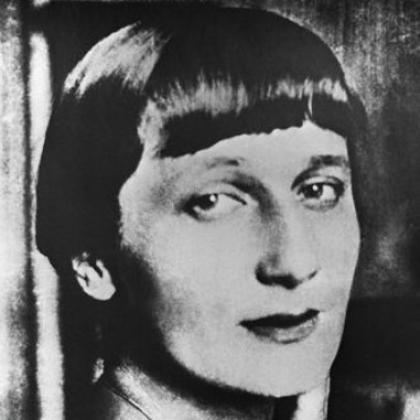
During the Great Terror, the son of the famous Russian poet Anna Akhmatova was arrested and released several times until, in 1938, he was arrested again and spent seventeen months in the Kresty prison in Leningrad. In the cycle of poems titled REQUIEM, Akhmatova described this period of her life and how, “in the fearful years of the Yeshov terror”, she spent all those months waiting long hours in prison queues to bring packages for her son. “One day”, she wrote, “somebody ‘identified’ me. Beside me, in the queue, there was a woman with blue lips. She had, of course, never heard of me, but she suddenly came out of that trance so common to us all and whispered in my ear (everybody spoke in whispers there): ‘Can you describe this?’ And I said: ‘Yes’. And then something like the shadow of a smile crossed what had once been her face.” This is the smile that terror can’t erase because it comes straight from the soul.
+ + + + + + + + +