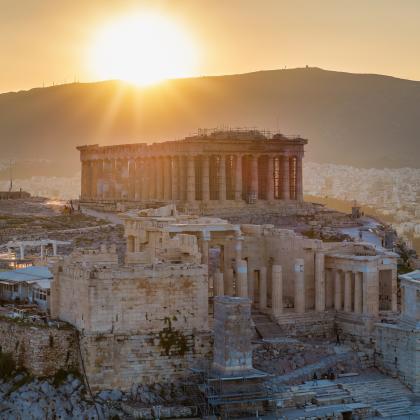
On the 7th of October, the American Secretary of State, Marco Rubio, held a speech in Athens (Greece). Against the backdrop of the ruins of the Parthenon, he told his audience how “[f]or thousands of years, the civilization that built what stands behind me has captivated the imagination of the Western world. Generations of our statesmen, artists, and philosophers have looked to it with wonder and they’ve looked to it with awe. […] Empires have risen and fallen beneath its shadow. And the progeny of the men who built it – the sons of Athens and Rome – have carried their civilization with them to the ends of the Earth. Two and a half centuries after the founding of the American republic halfway across the world from where I stand now […] I stand to testify to a debt that no lapse of time, no distance of space can ever extinguish. The history of America, the history of my country, is covered with the fingerprints of antiquity. Greece is literally carved into the architecture of our government: in the towering columns, in the domes and the monuments across our capital city. The city where our Constitution was born – Philadelphia – is itself a Greek name.”
Philadelphia
Yes indeed, Philadelphia is the Greek name of the city that played such a crucial role in the early history of the United States of America. Yet, and perhaps more importantly so, it was the name of an ancient city which was founded in 189 B.C. in Asia Minor, the Anatolian peninsula. Philadelphia was named after its founder, Attalus II, whose nickname was Philadelphos ‒ “one who loves his brother” ‒ by his elder brother, who was King of Lydia. In those days, Asia Minor bore the fingerprints of late antiquity, but it was also the place where, during the first centuries of our era, the apostles helped establish the earliest Christian congregations.
The message to the Seven Churches
This is how Philadelphia rose to fame as one of the seven cities of Western Anatolia that figure in the Apocalypse, the Book of Revelation, in which St. John described the vision he received when he was on the nearby island Patmos. “On the Lord’s day,” so John, “I was in the Spirit, and I heard behind me a loud voice like a trumpet, saying, ‘Write on a scroll what you see and send it to the seven churches: to Ephesus, Smyrna, Pergamum, Thyatira, Sardis, Philadelphia, and Laodicea’.” The Apocalypse became the last chapter in the New Testament. It is “the revelation of Jesus Christ, which God gave Him to show His servants what must soon come to pass. He made it known by sending His angel to His servant John, who testifies to everything he saw. This is the word of God and the testimony of Jesus Christ.” […] “He who has an ear, let him hear what the Spirit says to the churches.”
The door that no one can shut
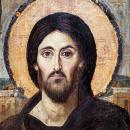
To the angel of the church in Philadelphia St John wrote: “These are the words of the One who is holy and true, who holds the key of David. What He opens no one can shut, and what He shuts no one can open. I know your deeds. See, I have offered before you an open door, which no one can shut. For you have only a little strength, yet you have kept My word and have not denied My name.” With the “key of David” Jesus Christ, the One who is Holy and True, opens the door that connects the world of the senses, the pysical universe, and the personal uiverse of the spirit, the Kingdom of Heaven that is within each of us.
The very principle of Man’s existence
Inspired by the Light that shines through the door that no one can shut, it was in the American Philadelphia that, on the 4th of July 1776, eleven years before the Constitution was “born”, the thirteen States of America, while united in Congress, unanimously declared: “We hold these truths to be self-evident, that all men are created equal, that they are endowed by their Creator with certain unalienable Rights, that among these are Life, Liberty and the pursuit of Happiness.” In his Athens speech, Secretary Rubio proffered that “[f]or the Greeks of antiquity, the pursuit of excellence was the very principle of man’s existence.” That may be so, but for the Americans of the late 18th century, the very principle of Man’s existence was not the pursuit of excellence, but the pursuit of happiness. Which is why they also held, as fundamental truths, the political principles that to secure their and our unalienable rights “governments are instituted among Men, deriving their just powers from the consent of the governed, and that whenever any Form of Government becomes destructive of these ends, it is the Right of the People to alter or to abolish it, and to institute new Government, laying its foundation on such principles and organizing its powers in such form, as to them shall seem most likely to effect their Safety and Happiness.”
The spiritual ascent
Considering that the text of the Declaration of Independence provides that the pursuit of happiness is a right endowed to Man by his Creator and that the endowment isn’t part of some kind of phantasy or irrational belief, but that it is quite explicitly held as truth, this pursuit must be understood as the spiritual ascent that passes through the wide open door that the One who is Holy and True offered before us. To enable all Men to exercise their right to pass through this door from the world of the senses to the spiritual world, all that governments instituted among Men must and may do is see to it that no one shall block or hinder access to it by defending Man’s rights to Life and Liberty. This is the key consideration laid down in the preamble to the American Declaration of Independence.
The fingerprints of Nature’s God
Yet, two and a half centuries after the founding of the American republic and with the 250th anniversary of the Declaration fresh in mind, Secretary Rubio stood to tell his audience that “the story of America, the history of my country, is covered with the fingerprints of antiquity” and that “Greece is literally carved into the architecture of our government: in the towering columns, in the domes and the monuments across our capital city.” Not a word about the fact that the document that plays a seminal role in the history of his country is covered with the fingerprints of Nature’s God, the Creator of Man, Who endowed Marco Rubio with the unalienable rights that were “carved” into him and that he, as member of the American Government, was assigned to secure, not just for himself, but for all Americans.
Pursuing national power and dominance
Instead, Secretary Rubio called his audience’s attention to the fact that, in America’s capital city, “[u]nder President Trump, the United States has made its choice. We choose the unapologetic pursuit of national power: to take back control of our critical supply chains, to reindustrialize our economy, to rebuild our defense, to fight for dominance of the technologies and industries of the future. We choose to reach for new frontiers: in advanced manufacturing and super intelligence; in drones, weapons, and warfare; in chips, minerals, cyber, and every other domain of human possibility. To unleash our energy, to rebuild our factories, to return our astronauts to the moon and launch a new age of exploration in space.”
Of Rights and Just Powers
In 1776, the 13 governments of the united States of America understood and unconditionally acknowledged the fact that they lacked all power of choice since they derived their just powers from “the governed”, who, in this instance, used their unique power of choice to determine and unanimously declare that they had instituted their governments for no other purpose than that the latter should use these delegated powers to faithfully execute the task of securing the unalienable rights of the governed. That these rights are unalienable, which makes that they can’t be transfered to Governments. That all that the governed can transfer to their governments was the formers’ just power to defend their rights. That Governents which abuse these just powers in violation of these rights may be altered or abolished so that the door that no one can shut remains open for everyone.
Remnants of distant cultures
Secretary Rubio opened his Parthenon speech with the words: “There are great ruins all across the world. In many cases, they are places where history seems to have exhausted itself: remnants of distant cultures that have long passed beyond living memory.” His message that the United States “choose to reach for new frontiers: in advanced manufacturing and super intelligence; in drones, weapons, and warfare; in chips, minerals, cyber, and every other domain of human possibility”, confirms the reality that the U.S.A. has definitely exhausted the meaning of the document that marks the beginning of its very own history. Step by step, American governments turned it into a somewhat peculiar remnant of a distant culture that existed in America some two and a half centuries ago. Today, all that reminds us of that culture is a sheet of parchment that was laid to rest in the Rotunda of the National Archives Building, a monument that, quite fittingly, bears all the fingerprints of the ruins of another distant culture.
+ + + + + + + + +