In my previous article, Russia and the smile that can’t be erased, I wrote that the current Western potentates and airheads posing as wise leaders who are “called” to prepare their peoples for war with Russia are apparently unaware of the fact that they’re dealing with a nation that, against all odds and at great cost, miraculously survived the dehumanizing suppression that its own leaders inflicted upon it. Russians showed that Man can survive in the face of pure, unmitigated, evil, no matter whether it came from abroad or from within their own people. They showed that you can kill a Man’s body and “get to” a Man’s soul, but that you can’t kill the human soul because it bears the imprint of God’s image, the imago Dei, and thus transcends and “escapes” the physical world.
The shadow of a smile
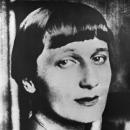
I illustrated my words by quoting the impressive Russian poet Anna Akhmatova. During the Great Terror, her son Lev was arrested and released several times until, in 1938, he was arrested and locked up in Leningrad’s Kresty prison for seventeen months. In the introduction to the cycle of poems titled REQUIEM, Akhmatova describes how she spent all those months waiting long hours in prison queues to bring packages for her son. “One day, somebody ‘identified’ me. Beside me, in the queue, there was a woman with blue lips. She had, of course, never heard of me, but she suddenly came out of that trance so common to us all and whispered in my ear (everybody spoke in whispers there): ‘Can you describe this?’. And I said: ‘Yes’. And then something like the shadow of a smile crossed what had once been her face.”
Face and Countenance
The shadow of that smile made what had once been a face visible again as a face that expressed the woman’s beingness. All of a sudden, her face became a countenance. This transformation happened when Akhmatova acknowledged the presence of the human being that had been in hiding behind what had once been a face. She activated the human soul who was still alive and capable of showing herself in a face that became a countenance when, just for a brief moment, it served as the visible interface between the soul and the world. In the Byzantine and Russian Orthodox Churches’ Tradition, the Icon is understood as that interface between the visible and the invisible realm. It is the wooden “plane” on which the iconographer makes the “embodied soul” visible in the countenances of his subjects. In the first decades of the 20th century, the Russian scientist and Orthodox priest Pavel Florensky made a seminal contribution to understanding Icons as deeply religious artefacts. All his life, so wrote Florensky in his testament to his children, he had not only “wanted to see the soul”, but that he had wanted “to see it embodied”, not only in a living human face, but also in the Ikon.
The Image and the Likeness of God
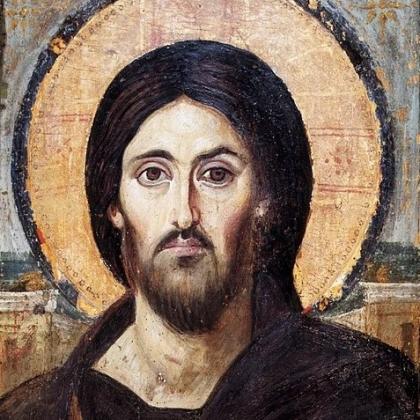
In his book Iconostasis, Florensky explained that in search of the embodied soul, we must differentiate the image of God from the likeness of God. “Long ago, the Holy Tradition of the Church explained that the image of God must be understood as the ontologically actual gift of God, as the spiritual ground of each created person; whereas the likeness of God must be understood as the potentiality to attain spiritual perfection: that is, to construct the likeness of God in ourselves from that totality of our empirical personalities called the image of God, to incarnate in the flesh of our personality the hidden inheritance of our sacred likeness to God: and to reveal this incarnation in our face (litzo [in Russian]).” The difference between God’s image and His likeness can be seen in the above Icon, where His image is represented as the nimbus just behind the head, while His likeness is represented as Christ’s countenance.
From Litzo to Lik
“Thus”, so Florensky, “our face gains the precision of a spiritual structure quite different from our ordinary face; but this difference is, in turn, quite distinct from our face as an artistic image or portrait ‒ not, however, due to any motivation of our own (i.e., our faceʼs ‘composition’ or ‘tone’ or ‘character’); rather, this difference is due to the material reality of our face conforming to the deepest tasks of its own essence. Everything accidental, everything caused by things external to this essence ‒ i.e., everything in our face which is not the face itself ‒ is swept away by an energy like a strong fountain of water breaking through a thick material husk, the energy of the image of God: and our face (litzo) becomes a countenance (lik [in Russian]).” What Akhmatova saw as the shadow of a smile was the shadow of the energy of the likeness of God breaking through the face what had become a “dead husk”.
A spiritual light
According to Florensky, “we are beholding a countenance, then, whenever we have before us a face that has fully realized within itself its likeness to God: and we then rightly say, Here is the image of God, meaning: Here is depicted the prototype of Him. When we contemplate this holy countenance, we thus behold the divine prototype; for those among us who have transfigured their faces into countenances proclaim ‒ without a word and solely by their appearance to us ‒ the mysteries of the invisible world.” One of Florensky’s colleagues, the expert in contemporary iconography and icon painter Leonid Alexandrovich Ouspensky (1902 – 1987) put it as follows: “The beauty of an icon is the beauty of the acquired likeness to God and so its value lies not in being beautiful in itself, in its appearance as a beautiful object, but in the fact that it depicts Beauty.” In case you might think these words only apply to Russian icons, you’re wrong. According to the famous French painter and superb portraitist Henri Matisse: “The character of a drawn face does not depend on its various proportions but on a spiritual light that it reflects.”
The Pursuit of Happiness
When it is possible to see pure Beauty and even the likeness of God manifested in the countenances depicted on Icons that enlighten the image of God as “the ontologically actual gift of God, as the spiritual ground of each created person”, we might also be able to detect in that very same gift the endowment made to Man by his Creator, the unalienable rights of Life, Liberty and the Pursuit of Happiness, as rooted in that spiritual ground of each created person. Grasping the profound meaning of these key words laid down in the preamble to the Declaration of Independence is not simply a matter of semantic, juristic, philosophical or political understanding and interpretation. They can only be understood and known as truths when they evoke in us the certainty that they belong to the Ground in which we ourselves participate: the Divine Ground of Being. Perhaps this is best expressed by paraphrasing as follows the words that Thomas Jefferson put in writing when he drafted the Declaration: We hold these truths to be self evident, that all Men are created equal in the image of God; that His image is the source of Man’s energy (Life) and freedom (Liberty) to pursue God’s likeness and attain spiritual perfection (Happiness).
+ + + + + + + + +