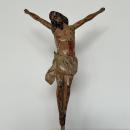
While quarreling with the Pope over the legality of his “Epic Fury” Operation, the President of the United States of America had no qualms about showing the Bishop of Rome, the most prominent Vicar of Jesus Christ, that, in matters of Church and State, he considered himself to be the Pope’s superior. To make his point, the President posted a meme that unmistakebly depicts his younger self as Jesus wearing a red-purple mantle. If it really was the President of the United States’ intention to lecture the Pope on “being a Great Pope, not a Politician”, then, perhaps, it would have been more effective and befitting the decorum of the Office of President of the United States of America, had he, instead of shooting from the hip with vulgar blasphemy, referred the Holy Father to Jesus Christ’s confrontation with the “old Cardinal Grand Inquisitor” as described by Fyodor Dostoevsky in the Legend in the Brothers Karamazov.
The Legend
The Legend is a story within a story. It is Ivan Karamazov’s poem “set in Spain, at the most dreadful period of the Inquisition”. Following an auto-de-fe in Seville, where “very nearly a good hundred heretics” were burned at the stake, Christ appears on the scene “quietly, unostentatiously, and yet – strange, this – everyone recognize[d] him.” The Grand Inquisitor has Christ arrested and then visits Him in prison. He introduces himself as one of the clerics who had chosen to enter into the affairs of the world by taking “the sword of Caesar” to “reign over human beings”.
Not by bread alone …
In a long monologue, the Cardinal unfolds his vision of mankind and the role of the clergy in worldly affairs, especially in view of Christ’s decision to ignore the suggestion, made by Satan during His stay in the Desert, that He should turn stones into loaves so that mankind would go “trotting after [Him] like a flock, grateful and obedient, though ever fearful that you may take away your hand and that your loaves may cease to come their way”. The Cardinal bluntly confronts Christ, saying: “But you did not want to deprive man of freedom and rejected the offer, for what kind of freedom is it, you reasoned, if obedience is purchased with loaves? You retorted that man lives not by bread alone, …”
All will be happy
“For who shall reign over human beings”, the inquisiting Cardinal tells Christ, “if not those who reign over their conscience and in whose hands are their loaves?” […] “Oh, we shall permit them sin, too, they are weak and powerless, and they will love us like children for letting them sin. We shall tell them that every sin can be redeemed as long as it is committed with our leave, we are allowing them to sin because we love them, and as for the punishment for those sins, very well, we will take it upon ourselves … […] The most agonizing secrets of their consciences – all, all will they bring to us, and we shall resolve it all, and they will attend our decision with joy, because it will deliver them from their great anxiety and fearsome present torments of free and individual decision. And all will be happy, all the millions of beings, except for the hundred thousand who govern them. For only we, we, who preserve the mystery, only we shall be unhappy.”
Do not come back … ever
Christ remains perfectly still throughout the entire monologue. In the silence that falls when the Cardinal awaits Christ’s answer, the latter “suddenly draws near to the old man without saying anything and quietly kisses him on his bloodless, ninety-year old lips. That is His only response. The old man shudders. Something has stirred at the corners of his mouth; he goes to the door, opens it and says to Him: ‘Go and do not come back … do not come back at all … ever … ever!’ And he releases him into the ‘the town’s dark streets and quarters’.”
The ideal of life
In a letter to one of his readers, Dostoevsky explained The Legend as follows: “Christ knew that men do not expect to live by bread alone. If, furthermore, there is no spiritual life, no ideal of Beauty, then man grieves, cheats, loses his mind, declines, or turns to pagan fantasies. But since Christ, in Himself and in his Word, is the ideal of Beauty, he decided that it is better to inspire man’s soul with the ideal of Beauty; possessing it in their souls, all men become brothers and then, finally, influencing each other, they will also be prosperous. When you give them bread, from boredom they may grant each other beer, become enemies of one another. But if you should give both Beauty and bread simultaneously? Then man would be deprived of toil, personality, self-sacrifice of his own goods for the sake of his fellow man – in a word, he would be deprived of life, the ideal of life. And consequently it is better to proclaim only the spiritual ideal. […] Not entering into any theories, Christ straightforwardly explained that in man, besides the animal nature, there is also the spiritual one.”
Wouldn’t it be wonderful …
… if Pope Leo XIV, the Vicar of Jesus Christ whose Kingdom is not of this world, would inspire the soul of the American President, the “Vicar” of “We the people of the United States”, with the ideal of Beauty, so that the latter may come to his senses and deliver on his express promise that he would not start but stop wars.
+ + + + + + + +